
Most Families Buy Organic Produce Thinking It's Cleaner. This Simple Water Test Tells a Different Story.
![[800x419 ~2:1] Close-up of a bowl of water with cloudy brown residue and oily film floating on surface next to fresh strawberries on a kitchen counter](images/purepod_images/hero-dirty-water.webp)
If you buy organic and assume your family is eating clean, you need to see what a ten-minute water test pulls off produce you already paid a premium for.
Lauren M. spent an extra $40 a week on organic. She knew the Dirty Dozen by heart. If it didn't have a USDA organic sticker, her three kids didn't eat it.
Then her friend Rachel dropped Lauren's own organic strawberries into a bowl of water with a small device about the size of a soda can. Ten minutes later the water was cloudy brown with an oily film on top. Lauren touched it.
Waxy.
Those were the strawberries she packed in her kids' lunches every morning. The ones with the green label.
"I just stood there staring at the bowl," Lauren said. "I couldn't tell if I was angry at the company or scared for my kids. I'd been spending hundreds a month on organic thinking that meant safe. It didn't."
The Organic Label Doesn't Mean What You Think It Means
![[800x419 ~2:1] Close-up of fresh produce on a kitchen counter with visible waxy sheen under bright light, conveying hidden contamination](images/purepod_images/slot2_beforeafter_v2.webp)
Here's something the organic industry doesn't advertise:
Organic doesn't mean pesticide-free.
It means different pesticides. Ones approved under organic farming regulations. But pesticides all the same, designed to bond to the surface of produce and survive rain, handling, and transport.
And that's just the start. Cross-contamination from neighboring conventional farms is so common that the USDA doesn't even require organic produce to test free of synthetic pesticide residues. Drift from crop dusters, shared irrigation, contaminated soil -- it all carries over.
According to the USDA and the Environmental Working Group, over 20% of organic produce samples test positive for synthetic pesticide residues they weren't even supposed to have. And that's on top of the organic-approved pesticides already there.
Then there's everything else. Before your organic strawberries reach your kitchen, they've traveled across conveyor belts, been touched by dozens of hands, sat in warehouse crates, and ridden in transport trucks alongside who-knows-what. Bacteria from handling and shipping coats the surface right along with the pesticide residues.
A quick rinse under the tap doesn't touch any of it. Water removes roughly 20-30% of surface contaminants. The rest -- the residues bonded to commercial wax coatings, the chemicals designed to survive rainstorms -- stays right where it is.
So when you pay double for organic and rinse it under the faucet, you're removing about a quarter of what's there. And you're feeding the rest to your family.
What makes this worse is that children's smaller bodies absorb more pesticide residue per pound of body weight than adults. Every strawberry, every apple slice, every handful of grapes compounds the daily exposure.
Right now, it's especially bad. Recent studies show that pesticide residues on produce are at record highs, driven by increased pesticide use in commercial farming and loosening regulations.
Lauren thought the organic label was her shield. It wasn't even close.
Everything Lauren Tried After That Failed
![[800x419 ~2:1] Kitchen counter cluttered with failed produce cleaning attempts — vinegar bottle, baking soda box, produce wash spray, scrub brush, bowl of half-cleaned berries](images/purepod_images/failed-solutions-counter.webp)
Once Lauren saw that dirty water, she couldn't unsee it. She went on a cleaning spree that lasted two weeks and accomplished almost nothing.
First came the vinegar soak. She mixed a 3:1 water-to-vinegar solution and dropped the strawberries in. Twenty minutes later, the berries tasted sour. Her youngest wouldn't eat them. And when she looked into it, vinegar only dissolves what's sitting loosely on the outermost surface. It can't break the bond between the pesticide residue and the wax coating underneath.
Next she tried baking soda. Scrubbing each piece of fruit by hand with a paste. It took her twenty minutes to do a single bowl of berries. Messy, tedious, and according to the research, still only surface-level.
Her husband Derek tried a commercial produce wash from Whole Foods. Fourteen dollars for a spray bottle that was basically another chemical sitting on their food. The Amazon reviews said the same thing: no proof it actually did anything. Some bottles went rancid before they were half empty.
Then Lauren looked into the high-end countertop purifiers. Three hundred dollars and up. Special tablets you had to keep reordering. One brand had a monthly subscription just for the cleaning cartridge. And the reviews all said the same thing: no visible evidence it was working.
None of these methods do the one thing that matters: they don't break apart pesticide residues at the molecular level. They clean the surface, at best. The residues that are bonded into the wax coating -- the ones engineered to survive a thunderstorm -- stay exactly where they are.
Every option had a fatal flaw. Every path was incomplete.
"I spent two weeks scrubbing, soaking, and spraying everything we ate," Lauren said. "Thirty minutes before every meal. Vinegar smell all over the kitchen. Baking soda caked on the counter. And I still had zero way of knowing whether any of it was actually doing anything."
Then Rachel Showed Her What Actually Worked
![[800x419 ~2:1] Worried young mother standing in kitchen looking at bowl of produce, arms folded, conflicted expression](images/purepod_images/slot4_discovery_v3.webp)
That barbecue was the first time Lauren saw the dirty water. But it wasn't the last conversation she had with Rachel about it.
A week later, over coffee, Rachel said: "I went through the exact same cycle. Vinegar, baking soda, the expensive sprays. None of them ever showed me proof. Then I found the one thing that does."
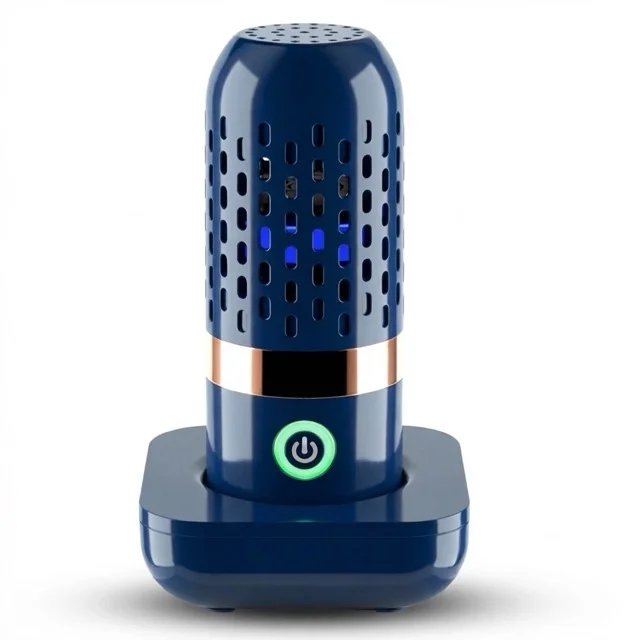
The small device Rachel had placed in the bowl was called PurePod.
And the reason it worked when nothing else did comes down to chemistry.
How PurePod Actually Works, And Why Water, Vinegar, and Baking Soda Can't
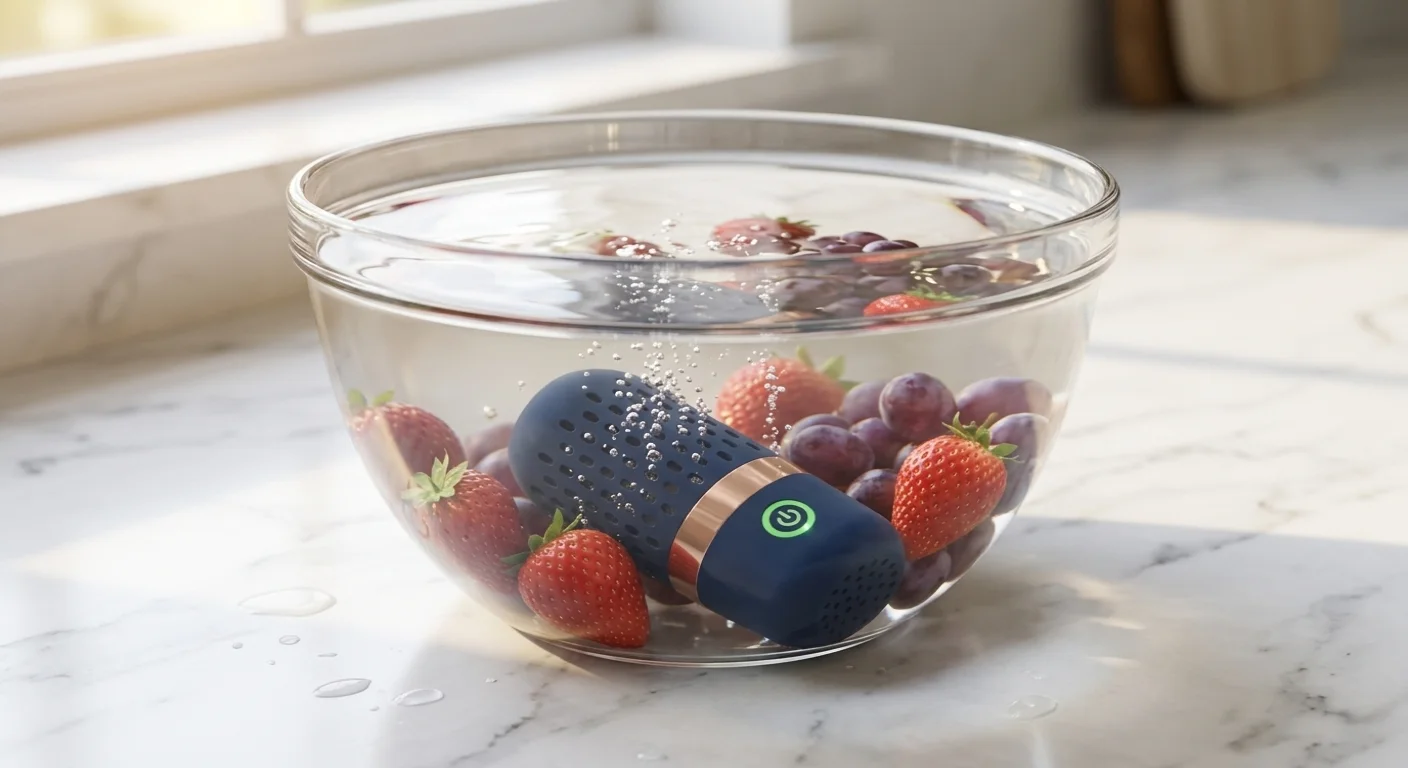
Every cleaning method Lauren tried works the same way: push water or a solution across the surface and hope it carries contaminants away.
But pesticide residues aren't loose dirt sitting on a strawberry. They're molecular bonds. Engineered to hold through rain, wind, handling, and weeks of transport. A rinse was never going to break them.
It doesn't matter if you rinse with tap water, vinegar, or a $14 spray. You're trying to wash off something that was designed to never wash off.
PurePod works differently.
It uses hydroxyl radical (OH-ion) technology, the same science used in commercial food processing plants, restaurant supply chains, and agricultural decontamination facilities worldwide.
In plain terms: PurePod splits water molecules apart and creates tiny molecular cleaning agents called hydroxyl radicals. These radicals are among the most powerful oxidizing agents in nature -- stronger than ozone, hydrogen peroxide, or chlorine.
They don't rinse. They break apart pesticide residues, wax coatings, and surface bacteria at the molecular level. The bonds that hold contaminants to your produce get severed. The residues lift off and float into the water.
And you can see it happen.
The cloudy water, the oily film, the brownish discoloration -- that's the proof. That's what was on your "organic" produce after you rinsed it. Every other method asks you to trust it's working. PurePod shows you.
![[580x400] Diagram showing Ion Purification Technology — ions breaking molecular bonds between pesticide residues and produce surface, contaminants releasing into water](images/purepod_images/ion-purification-diagram.webp)
No chemicals added. No soap. No spray. The cleaning agents come from the water itself. The only byproducts are water and oxygen.
Unlike ozone-based purifiers, which generate gas that the FDA has flagged for respiratory concerns, PurePod's process happens entirely inside the water. No gas, no smell, no risk.
Drop it in a bowl of water with your produce. Walk away. Come back in 10 minutes. Done.
What Changed After Lauren Started Using PurePod
![[800x419 ~2:1] Happy family in bright kitchen, kids eating fresh berries, mom smiling, clean and relaxed atmosphere](images/purepod_images/happy-family-produce.webp)
The dirty water was the turning point. Not because it scared her -- though it did -- but because for the first time she had proof that something was actually working.
"I handed my daughter a strawberry that evening and I didn't feel that little knot in my stomach," Lauren said. "For the first time in months, I just handed it to her and didn't think twice."
Within two weeks, the whole family noticed the taste. Berries tasted sweeter. Grapes tasted cleaner. The kids were eating more fruit because it tasted the way fruit is supposed to taste, without the waxy film muting the flavor.
And the produce lasted longer. "I used to throw away half my berries by Wednesday. Now they last until Friday or Saturday. That alone saves me a trip to the store every week."
Derek, the husband who had rolled his eyes at every vinegar soak and baking soda paste, saw the brown water and ran the next batch of apples himself. He does the Sunday produce prep now.
But here's the part that hit Lauren hardest. She ran conventional strawberries through PurePod one week, and organic the next. The water looked almost identical both times. Same cloudy brown. Same oily film. Same waxy residue.
She'd been paying double for produce that was just as dirty.
"I still buy organic sometimes," she said. "But I don't rely on the label anymore. PurePod showed me what was really on our food, organic or not, and gave me a way to actually do something about it. I wish I'd found this before I wasted a year paying premium prices and hoping for the best."
More Than 50,000 Families Have Made the Switch
![[800x419 ~2:1] Warehouse full of PurePod orders being packaged and shipped](images/purepod_images/warehouse-demand.webp)
PurePod was released recently, and once families realized they could actually see what was coming off their produce -- organic included -- and that a one-time purchase replaced every spray, soak, and scrub they'd been cycling through, demand exploded.
Last time PurePod completely sold out their inventory within 72 hours.

OrganicMomLies
14h

I spend $200/month extra on organic for my kids. Ran our ORGANIC strawberries through PurePod. The water turned BROWN. Same brown as conventional. I touched the surface and it was WAXY. I've been paying double for literally the same contamination. Already ordered a second one for my sister. 😭🍓
#PurePod #OrganicMyth
![[16:9] Bowl of cloudy brown water after PurePod cleaning with strawberries next to it](images/purepod_images/fb-post-dirty-water-berries.webp)



Dwight Murphy, Olivia
Jayden and
647
others
134 Comments




MealPrepMomJess
7h
Sunday prep game changer. I stopped buying organic after I saw the PurePod water test side by side. Organic vs conventional -- same gross water both times. Now I buy regular produce, run it through PurePod, and my berries last the ENTIRE week instead of going bad by Wednesday. Saving money on groceries AND getting cleaner food. My husband was skeptical until he saw the water. Now he does the Sunday batch himself. 🫐🍇
#MealPrep #PurePod
![[16:9] Kitchen counter with Sunday meal prep scene, bowls of clean berries, PurePod device visible](images/purepod_images/fb-post-sunday-prep.webp)
Isabella Mason, Sophia
William and
289
others
67 Comments

SkepticalDadMike
8h
My wife has been spending a fortune on organic produce for years. I always told her it was the same stuff with a fancier sticker. She bought PurePod and ran organic grapes vs regular grapes side by side. I'm not exaggerating -- the water was IDENTICAL. Both bowls looked like dirty dishwater. She's been paying double for nothing. We use PurePod on everything now. Bought two more for our parents.
🍎
#ConvertedDad #PurePod
![[16:9] Man looking surprised at bowl of dirty water after PurePod cleaning, apples on counter](images/purepod_images/fb-post-skeptical-dad.webp)
Myra Burgess, Greg Johnson
and
3400
others
141 Comments
I Tested PurePod Myself. Here's What I Found.
![[800x419 ~2:1] PurePod device sitting in a glass bowl of water with produce on a clean kitchen counter](images/purepod_images/product-in-bowl-kitchen.webp)
Week 1 I ran two tests the day my PurePod arrived. First I dropped it in a bowl of water with organic strawberries I'd already rinsed. Ten minutes later the water was cloudy brown with an oily film on top. Then I ran conventional strawberries from the same store. The water looked almost identical. Same cloudiness. Same waxy film. The organic label made no difference.
I also ran the device in plain water, no produce. The water stayed perfectly clear. The contamination comes from the food, not the device.
That was all I needed to see.
![[600x314 ~2:1] Glass bowl showing cloudy brown water with oily film after PurePod treatment, strawberries removed and sitting clean on a plate beside it](images/purepod_images/review-week1-dirty-water.webp)
Week 2 PurePod is part of the Sunday routine now. Berries, grapes, spinach, apples -- everything goes through it before it goes in the fridge. The water is a different shade of gross every time. Broccoli was the worst.
The surprise: my berries are lasting until Friday instead of going fuzzy by Wednesday. Less food waste, fewer emergency grocery runs. And the produce tastes noticeably better -- like the wax coating was muting the real flavor underneath.
I've stopped buying organic across the board. PurePod on regular produce gets it cleaner than organic ever was out of the package.
![[600x314 ~2:1] Kitchen counter with multiple bowls of different produce being cleaned in rotation, PurePod device visible, Sunday meal prep scene](images/purepod_images/review-week2-sunday-routine.webp)
Week 3 Handed my daughter a strawberry without thinking twice. No guilt. No background worry. Sent the side-by-side dirty water photos (organic vs conventional) to the group chat. Four friends ordered the same day.* The above are real PurePod customer experiences, your results may vary.
The simplicity is what makes it stick. No measuring, no mixing, no scrubbing, no chemicals, no subscription refills. Drop it in, walk away, come back to proof. Ten minutes. That's it.
![[600x314 ~2:1] Happy toddler eating a strawberry at the kitchen table, mother smiling in the background, warm family scene](images/purepod_images/review-week3-happy-kid.webp)
My Final Verdict
If you're paying extra for organic and rinsing it under the tap, you're removing about 20% of what's on it. The rest was designed to stay there.
The organic label doesn't mean pesticide-free. It means different pesticides, plus cross-contamination, plus bacteria from handling and transport. And a quick rinse doesn't touch any of it.
Vinegar soaks leave an aftertaste and only reach the outermost surface. Baking soda takes 20 minutes of scrubbing per bowl and still can't break the bonds beneath the wax. Commercial sprays are just another chemical on your food, and none of them prove they're doing anything.
PurePod breaks residues apart at the molecular level using hydroxyl radical technology. You can see the proof in the water every single time.
I've used it for over a month. The produce is cleaner, tastes better, and lasts dramatically longer. And I've stopped paying double for organic and hoping the sticker meant something.
How Much Does PurePod Cost?
PurePod normally retails for $59 per device, already a fraction of the organic premium most families pay every month.
To put that in perspective:
The average family spends $150-250 extra per month buying organic over conventional. That's $1,800-3,000 a year on a label that doesn't even deliver what it promises. Add produce wash sprays at $60-144/year and wasted produce that spoils before you eat it, and you're looking at thousands.
One PurePod: a one-time purchase. No refills. No subscriptions. Works on conventional AND organic produce. It pays for itself by the end of the first week, either in grocery savings or in the sprays and soaks you stop buying.
But right now, through this special online promotion, you can get PurePod for up to 70% off. When you consider that a single PurePod replaces every spray, soak, and scrub you've ever tried, and your berries last twice as long in the fridge, the math isn't even close.
*PurePod is currently offering a limited promotion with additional discounts starting on
How Can It Be So Affordable?
![[800x419 ~2:1] Close-up of PurePod device showing premium build quality, copper accent ring and perforated top detail](images/purepod_images/product-closeup-quality.webp)
Big-name kitchen brands are weighed down by middlemen, retailers, distributors, advertisers. By the time the product reaches you, the price is inflated two or three times over.
PurePod sells directly online. No middlemen. The savings go straight to you.
Most customers don't stop at one. They order for their parents, their siblings, and the friends who see the dirty water photos and immediately ask where to get one. Bulk discounts make it even more affordable.
PurePod isn't backed by a corporation. It's a focused company making real produce purification technology affordable for everyday American families.
Why Is It Discounted Right Now?
Standard launch strategy: offer early customers a significant discount in exchange for reviews and social media attention. Once demand grows, and it already has, the price returns to full retail.
The promotion links are active now. They won't be once inventory runs out.
Is It Worth It?
If you've been buying organic and trusting the label to keep your family safe, yes.
If you rinse your produce under the tap and call it clean, yes.
If you've tried vinegar, baking soda, or sprays and none of them ever showed you proof, yes.
If you throw away berries every week because they spoil before you eat them, yes.
If you've ever handed your kid a strawberry and felt a knot in your stomach wondering what's really on it, yes.
PurePod is one of the most affordable, lowest-maintenance, and most effective ways to remove pesticide residues, wax, and bacteria from your family's produce -- organic or conventional -- and actually see the proof.
90-Day Money-Back Guarantee. If the dirty water doesn't convince you, nothing will. But they'll give you your money back anyway.
You can keep paying double for organic and hoping the sticker means something.
Or you can drop a PurePod in a bowl of water and see what's actually been on your food this whole time.
Right now, on their official website, PurePod is offering their promotion price of - Up to 70% off - while supplies last.
If PurePod is still in stock, don't wait. They've sold out within 72 hours before.
UPDATE
*Update:
*
Since this article was originally published,
there's been massive demand for PurePod,
especially after studies revealed that organic
produce carries far more pesticide residue than
most families realize. Orders have been flooding
in. While inventory is dwindling, they're still
offering the
online-only promotion and bundle
discounts
, but only while supplies last.
LIMITED STOCK OFFER:
CLICK HERE TO CHECK
AVAILABILITY
IMPORTANT: Get
PurePod for Yourself and Everyone You
Love
USE PUREPOD FOR TRULY CLEAN,
PESTICIDE-FREE PRODUCE
APPLY DISCOUNT & CHECK
INVENTORY